
Inside the digestion chamber, there are two things in addition to the waste: a support material and a population of microorganisms. These are often referred to as the system’s «digestive system», and it is worth understanding why both are necessary.
First component: the Biorgmax medium
It is a high-density microfoam with a porous interior, specifically designed to break down food waste quickly. Its main component is olefin, the same natural material used to make candles.
This choice of material is no accident. Olefin is biodegradable, breaks down very quickly, and does not produce harmful gases, even when burnt. This sets it apart from plastics and bioplastics, which take between 3 and 8 years to degrade. In a product that comes into contact with food waste and water that goes into the sewer system, that detail matters.
Why is it porous and why is it star-shaped?
Two design decisions based on the same rationale: maximising floor space.
- Porous, to increase the specific concentration of microbes in the storage medium. The more microorganisms there are per unit volume, the faster digestion takes place.
- Star-shaped, to increase the surface area in contact with food and waste. Microbes must physically reach the waste in order to act upon it.
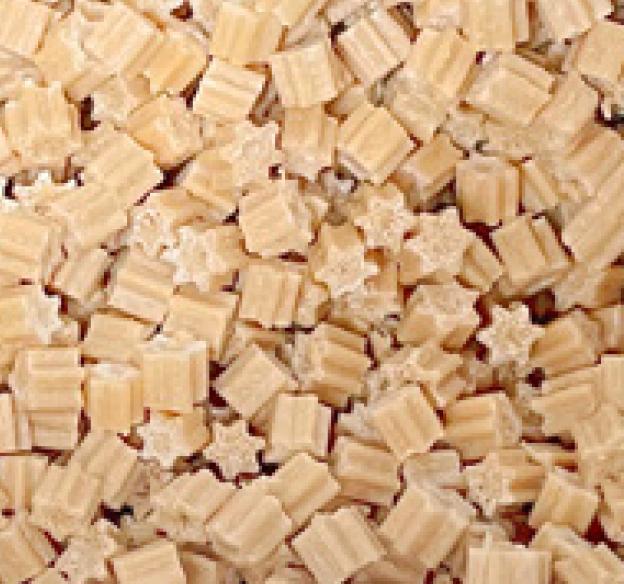
The medium also helps to control odours: by promoting aerobic activity, it suppresses anaerobic bacteria, which are responsible for unpleasant odours.
The DR300 is supplied with 210 litres of Biorgmax medium, which lasts for approximately 2 to 3 years.
Second component: the microorganism kit
21 types of aerobic microbes, selected for their effectiveness in breaking down organic matter. Three characteristics define the mixture:
- Excellent decomposition and preservation properties.
- Natural origin, without genetic modification.
- Broad coverage: the formulation is designed to be effective across a wide range of waste profiles, rather than for a specific type of feed.
It is this last point that enables the appliance to operate in a real kitchen, where vegetables, bread, meat, fish and dairy products are all used on the same day in no particular order. The enzymes act effectively on all food groups: proteins, carbohydrates, fats and cellulose.
The three phases of the cycle
Microbial decomposition does not occur all at once, but in stages:
- Mesophilic stage, within the first 16 to 24 hours: oxygen-tolerant bacteria begin to take effect.
- Thermophilic stage: decomposition accelerates as the temperature rises.
- Maturation stage: the remaining organic matter decomposes.
The end result of the cycle is reclaimed water, CO₂ and energy. Nothing else.
Measurements are not made by eye
Maintaining microbial balance is what distinguishes a digester that works from one that becomes blocked. That is why the equipment automatically controls a peristaltic pump, which injects the precise amount of enzymatic solution required for each cycle. A level sensor monitors the microbial solution tank.
The DR300 liquid enzyme kit contains 3 litres and lasts for approximately 6 months.
Both the technical data sheet for microorganisms and the safety data sheet are available: you can request them via the contact form.
